
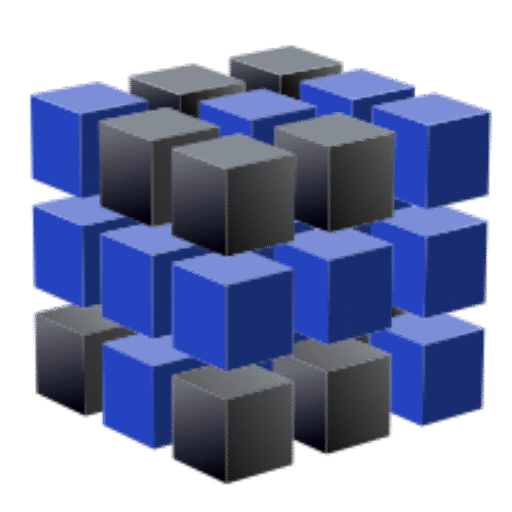
MĀYĀ / LOGOS: From Science Fiction to Science Fact.
Where did MĀYĀ come from?
A few months ago, we asked a seemingly simple question:
What if everything—from Einstein's equations to human consciousness—is the result of computation?
Not as a metaphor or a philosophical provocation, but as a real process occurring at the most fundamental level of reality.
For many, this intuition first resonated with the 1999 release of The Matrix—a fascinating "what if." We decided to take this question seriously: not as a cultural narrative, but as a physics and engineering problem.
This is how the MĀYĀ Theory was born—an ontological proposition in which reality is not a continuous entity or a collection of substances, but a discrete, clocked computational network from which the laws of physics emerge. In this view, the constants of nature—including the fine-structure constant—are not arbitrary parameters or a cosmic coincidence, but a consequence of the architecture and dynamics of this network.
Initially, it was a metaphor born from a piece of science fiction. But as it developed, something unexpected happened: intuition began to fit the formalism of physics in a surprisingly natural way. More and more familiar equations and concepts—from quantum mechanics to general relativity—no longer looked like independent constructs, but began to fit together into a single, coherent picture, like a missing piece of a scattered puzzle.
What was supposed to remain a literary metaphor began to look like a missing ontological level: not a new theory competing with existing ones, but a framework that organizes their tensions and shows them to be different manifestations of the same mechanism.
What MĀYĀ is not—and what it is
MĀYĀ is not a philosophical speculation about "the universe might be a simulation" in the sense of Nick Bostrom or the it from bit movement.
It does not rely on probabilistic, anthropic, or metaphysical arguments.
MĀYĀ is a working, quantitative project for describing reality.
It doesn't ask whether reality is computational. It shows that at the most fundamental level, it behaves exactly as if it were based on a computational architecture.
What MĀYĀ is already doing—and why it matters
MĀYĀ does what has been missing in fundamental physics for decades:
- shows that computational architecture is consistently revealed in all fundamental equations of physics—from quantum mechanics to relativity to cosmology—once we switch to the language of Planck units;
- reveals the common architecture behind quantum mechanics, relativity, and the structure of the Standard Model, without changing their formalism;
- shows that the Schrödinger, Dirac, and Einstein equations are not "ultimate laws of nature" but emergent instructions for the operation of a deeper, discrete computational matrix;
- explains the wave-particle nature of matter as a transition between distributed and synchronized states in the information network;
- solves the problem of measurement and the so-called collapse of the wave function without reference to the observer, multiverses or fundamental randomness;
- gives gravity the status of an emergent phenomenon resulting from global synchronization and local computational delays, instead of treating it as a "force to be quantized";
- indicates the geometric origin of the hierarchy of particle masses and the structure of interactions;
- eliminates entire classes of paradoxes — quantum, cosmological and ontological — by showing them as artifacts of an inadequate level of description;
- reproduces fundamental constants as consequences of architecture, not as “magic numbers” chosen by the Universe.
The most powerful example is the fine structure constant (α).
In the MĀYĀ framework, its value is not fitted empirically. It follows directly from the geometry and dynamics of phase locking in a discrete lattice—and the resulting number agrees with the CODATA data to nine significant digits.
This is not a proof.
It is a signal that we are reaching a level of description at which physics ceases to be a set of separate theories and begins to look like a coherent, executing system.
Next steps and research direction
Today – after the first publications and sharing of results on Zenodo – and in the context of growing tensions between observations (CERN, JWST) and the prevailing theoretical frameworks, in particular the Λ-CDM model and long-dominant but empirically unconfirmed unification programs such as string theory, we return to the idea of MĀYĀ not as just another speculation.
We are back with a specific direction for further research.
What was a fascinating intuition for millions of viewers in the movie The Matrix ceases to be a cultural metaphor here. It begins to look like a real, testable mechanism that can be described, implemented, and studied.
MĀYĀ as an open research project
To be taken seriously, a theory does not end with an elegant description.
It must be developed, specified, confronted with data, and systematically tested.
Therefore, we treat MĀYĀ as an open research project, the subsequent stages of which include:
- deriving quantitative predictions,
- identifying falsifiable elements that require further formal closure,
- studying how particle mass, interaction structure, Standard Model symmetries, and gravitational effects emerge from a single architecture,
- developing formalism where today it is still intuitive.
The scale of this task is enormous—too big for two people.
That's why from the beginning we've been thinking of MĀYĀ as a collaboration platform around which an interdisciplinary team of physicists, mathematicians, computer scientists, and simulation specialists can form.
Key Test: Universe Simulator
The most important step at this stage is one specific experiment.
Our goal is to create a Universe Simulator—a working simulation of the discrete MĀYĀ network.
It is not about simulating the entire Universe.
It is about checking the feasibility and behavior of the postulated architecture in a controlled, computational environment.
With clearly defined local rules – elementary bit of information, phase rotation and communication with the immediate environment (26 neighbors) – we investigate what classes of dynamics emergently.
Universe Simulator is intended to be a tool:
- to explore the consequences of MĀYĀ's assumptions,
- to formulate further predictions,
- to test the stability, scalability and scope of emergence of phenomena.
This is the moment of transition:
from idea → to implementation,
from description → to dynamics,
from narrative → to measurable system behavior.
Who we are and why we do it
We are Seweryn and Daniel. Two brothers with passion. A graphic designer and an analyst.
We are not physics professors at major universities.
And that is why we were able to look at fundamental problems from a different perspective.
Our work on MĀYĀ began after hours—in the evenings, between daily duties.
Initially, out of pure curiosity. Over time, something unexpected happened:
the patterns started to fit together with incredible precision.
What was supposed to be an intellectual exercise began to organize real-world problems that physics had been grappling with for decades. The vision of a discrete, computational reality didn't multiply paradoxes—on the contrary, it began to reduce them.
At some point, it became clear that this was no longer a hobby.
It became a mission.
Why we need support
A mission of this scale requires the one resource we lack most today: time.
We are currently developing MĀYĀ at the expense of sleep, rest, and family life. For a theory to move from the phase of "intriguing hypothesis" to the phase of seriously tested and developed model, we need not a few free evenings but full, concentrated days—in practice, weeks, months, and years of work.
Ahead of us, among others:
- programming a complex, three-dimensional simulation (Universe Simulator),
- further development of the theory and its formalism — specifying the assumptions, closing the mathematical structures and systematically deriving the consequences of the model,
- deep mathematical analysis of emergent equations and their relations to known physical theories,
- iterative testing, result verification, hypothesis falsification and publications.
We want to treat MĀYĀ with the seriousness it deserves.
To make this possible, we must—at least for a while—turn our greatest hobby into our job.
Not forever.
Long enough to either honestly confirm or ruthlessly refute this theory in a way that no one can ignore.
What do you really support?
You're not just supporting a research project.
You're supporting a moment of change.
If MĀYĀ proves accurate, it won't just change physics.
It will change the way we think about reality.
The history of science is merciless here:
every change in the fundamental paradigm has triggered an avalanche of consequences that no one could have foreseen at the outset.
Classical mechanics → industrial revolution.
Electromagnetism → electricity and global communication.
Quantum mechanics → transistors, lasers, computers, the Internet.
Relativity → GPS, time synchronization, satellites.
Each time, technology was a side effect.
First, the way of understanding the world changed.
Only then did the world change technologically.
If MĀYĀ describes a real mechanism from which time, space, matter, and interactions emerge, then we are talking about something much bigger than just “another theory.”
We're talking about a new way of thinking about:
• Information as a primary physical resource
• Energy as a cost of processes
• Matter as stable patterns
• Gravity as a result of system organization
These are not minor corrections.
This is a change in the language of describing reality.
And when the language used to describe the world changes, what can be controlled, designed, and built also changes.
And this goes beyond physics.
Philosophy is changing:
the world is no longer a "collection of things" and begins to be a working process.
The religious and theological perspective is changing:
Instead of a world "made of matter", there appears a world activated by principles.
In such a picture, the notion of a Creator becomes intellectually more plausible than a scenario in which a coherent, precise, and stable architecture of reality emerges completely on its own, without a source of rules.
The Creator looks less and less like a craftsman shaping matter, and more and more like an architect of rules—one who establishes the rules, synchronization, and conditions of stability without which order could not be maintained at all.
The question of existence changes:
not "what is the world made of?",
but "how does the mechanism that sustains it work?"
If this level of description proves accurate, future technologies may be as unimaginable to us as electronics was to people in the 19th century.
Not because anyone knows the answers today.
But because we are opening the door to a level from which answers are only just emerging.
By supporting MĀYĀ, you are not financing ready-made solutions.
You are supporting the moment before them.
The moment when the way you look at the world changes.
And that's why it's worth being there now,
and not reading about it in a textbook twenty years from now.
Join the beginning
The crowdfunding campaign is starting soon.
But the foundation is being laid now.
Become part of MĀYĀ's Inner Circle
The success of a project depends on the community built before launch. If you want to be at the heart of this movement:
Subscribe to the Inner Circle list
You'll only receive the key information: a direct link to the campaign, closed Q&A, first looks at the code, and simulation results. This isn't a newsletter—it's a ticket to entry.
Follow and share
On our channels (launching soon), we'll be showcasing research, visualizations, and conceptual musings. If you know someone who feels like physics is stuck and needs a new language, please share this idea with them.
Become an ambassador for the idea
Do you run a blog, a YouTube channel, or are active in scientific or futuristic environments? We want to build a network of people who will help MĀYĀ reach bright minds. Get in touch.
Finally, what is this really about?
It's about blazing a trail.
It's about trying to answer — using the language of information, geometry and algorithms — questions that have been on the border of physics, mathematics and philosophy for decades, but have never been combined into a single, coherent picture.
MĀYĀ doesn't offer ready-made answers today.
But for the first time it suggests that all these questions may have a common source—a single execution mechanism from which the physics we know inevitably emerges.
In this sense, it's no longer just about how the Universe works.
The point is:
– what reality really is, if at the most fundamental level it is not a set of objects but an executing process,
– who are we if what we call "body" and "brain" are part of this architecture,
– what is the place of humans if we are not merely observers from the outside, but elements of the mechanism we are trying to understand—
and perhaps even an interface through which something outside this architecture experiences the world,
– where is the world heading if its structure is not accidental but results from deep, immutable principles of organization.
That's why what we do isn't just a science project.
It's an attempt to look behind the formalism—to reveal a layer that has been hidden beneath the equations for decades.
Perhaps the answers we seek are not as complicated as we thought.
Perhaps they are surprisingly simple, consistent, and beautiful—if only we look at reality from the right perspective.
“All we see is but a dream within a dream.” — Edgar Allan Poe