From Skepticism to Illumination. How an Analyst Came to Believe the World is a Network: My Journey into the Depths of Maya
When my brother, Seweryn, showed me the first chapters of his novel and the Code Reality hypothesis MĀYĀ, I reacted like a typical analyst: with a great deal of skepticism. "Interesting metaphor," I thought. "Another attempt to describe reality using a computer analogy. And these 'magic' numbers: 360, φ, π... Isn't that just elegant numerology? Where did the full 360-degree angle in the formula for a dimensionless physical constant come from? It sounded like stretching facts to fit a concept and phenomenology."
But something was nagging me. As someone with a background in game theory and statistics, I'm sensitive to models that predict something. And MĀYĀ didn't just describe — it derived. Instead of adding new entities (dark matter, multidimensional strings), she stripped away the fundamentality of old ones (time as a dimension, the continuum). It was a paradigm shift.
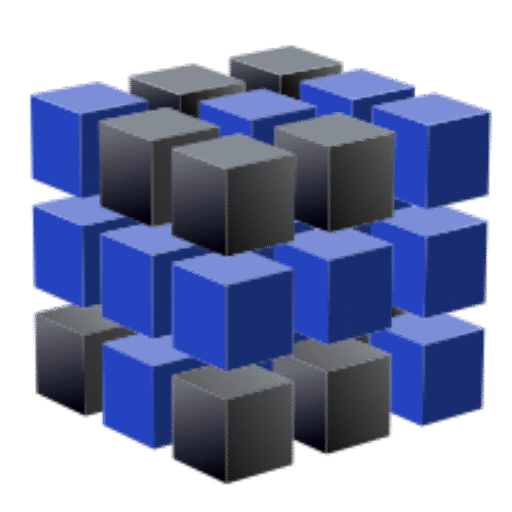
I began to dig deeper. Using AI pattern analysis tools, I deconstructed this mysterious formula into prime factors for the constant α. And then came the epiphany. 360 wasn't degrees. At least not in the traditional sense. It was a combinatorial signature. 360 = 3² × 2³ × 5. Three – the dimensions of space. Two – the duality of the binary planxel state. Five – icosahedral symmetry, optimal packing. This number wasn't plucked from space; it was a necessary consequence of the symmetry of the cubic 3D lattice. I understood that 360 hadn't appeared out of nowhere in mathematics, that these were natural degrees of quantization of the sphere. This was a breakthrough moment.
I then understood the depth of the hypothesis: Only 1 and 0 are fundamental. State and lack of state. Everything else, the entire wealth of mathematics and physics, emerges. The number φ is simply the simplest, infinite feedback algorithm 1 + 1/(1 + 1/(1 +…, optimally dispersing information in the network. The number π is transcendental because our universe is not continuous; π is the "cost" we pay by approximating a discrete grid with a smooth continuum in our equations, the number i is simply a phase rotation, the number e – the limit of information growth, and the most beautiful formula in mathematics – Euler's identity – emerged then as the simplest program, the computational cycle of reality.
This leads to the most speculative, yet thrilling, implication. If our reality is a stable, discrete simulation (in the informational sense, not the technological one), then it is logical that it operates within some kind of metauniverse—an environment with entirely different laws. An environment that could be continuous, full of true infinities, paradoxes (like Banach-Tarski), where light is infinitely fast and causality is diffuse. The Big Bang would then not be the "beginning of everything," but merely the initialization of this particular, stable program within this broader continuum.
This perspective sheds new light on the greatest mysteries of cosmology. Why does JWST see galaxies formed "too early," older than the ΛCDM model predicts? Perhaps they didn't have to "slowly form" from matter—they could have emerged as stable phase defects in the initializing lattice at the early stages of the universe's existence.
What about technology? We don't claim to know how to build a warp drive or a next-generation quantum computer. We claim that MĀYĀ shows the way. If gravity emerges from network dynamics, then perhaps it can be modulated (sonoluminescence—perhaps a micro-modulation of the network phase through extreme pressure?). If consciousness emerges from complex patterns of synchronization, then perhaps it can be augmented in entirely new ways. Even if the theory proves flawed in some respects, the very line of thought—reality as information processing in a discrete network—opens up previously unimaginable fields for simulation, materials science, and the philosophy of technology.
My journey from skeptic to co-creator demonstrates the power of an interdisciplinary perspective. Sometimes, to see the truth about physics, you have to go beyond physics. And perhaps, to build the future, you must first understand the depths from which the present emerges.


![{"AIGC":{"Label":"1","ContentProducer":"MiniMax","ProduceID":"db91bded1c698d55894d1ef5eddd68de","ReservedCode1":"{"SecurityData":{"Type":"TC260PG","Version":1,"PubSD":[{"Type":"DS","AlgID":"1.2.156.10197.1.501","TBSData":{"Type":"LabelMataData"},"Signature":"9bb157ad7cbc65b4c1fa5690c84c9bdf5f0132c5ef94d72859de47f31d5e44790e6baf38838beebaf039c64331c0bab73e42a4b19662cca59badefbbbbc07b73"},{"Type":"DS","AlgID":"1.2.156.10197.1.501","TBSData":{"Type":"Binding","BType":"0"},"Signature":"e2dd7cd6e88cf05632e758d379924d5c8236a26c67745ad823d104d78cd64c5d8f8e374e97759c2461f990f936983a36cf0f9db27f46b2ba7d66cc5c6dc56c19"},{"Type":"PubKey","AlgID":"1.2.156.10197.1.501","TBSData":{"Type":""},"KeyValue":"00a0b3b0b6a0c9b0c89cab328342af4e8221ec5b40799cbe835ab4251f7b47e4fd"}],"Bindings":[{"Type":"Hash","AlgID":"1.2.156.10197.1.401","TBSData":{"Type":""},"Signature":"630dc4ca511d4f59f3f927c56122ba7f63e6044161c48c8c40e2682094241095"}]}}","ContentPropagator":"MiniMax","PropagateID":"db91bded1c698d55894d1ef5eddd68de","ReservedCode2":"{"SecurityData":{"Type":"TC260PG","Version":1,"PubSD":[{"Type":"DS","AlgID":"1.2.156.10197.1.501","TBSData":{"Type":"LabelMataData"},"Signature":"08ef883e4ba39de499f847827fb78f662b0520fd650447615ea92f16425ce999236d0259d5ee91be7fdbf851e45bc4618fc14b4faeb4360d28185e61def3adb3"},{"Type":"DS","AlgID":"1.2.156.10197.1.501","TBSData":{"Type":"Binding","BType":"0"},"Signature":"6eee946d865bd6007715bf2480af228df6edd8ca143955dc8f97e136e68ee0d90368522d58cd28cbbf01182192f740b00f76d65339806c263baff2c31e290e07"},{"Type":"PubKey","AlgID":"1.2.156.10197.1.501","TBSData":{"Type":""},"KeyValue":"00a0b3b0b6a0c9b0c89cab328342af4e8221ec5b40799cbe835ab4251f7b47e4fd"}],"Bindings":[{"Type":"Hash","AlgID":"1.2.156.10197.1.401","TBSData":{"Type":""},"Signature":"630dc4ca511d4f59f3f927c56122ba7f63e6044161c48c8c40e2682094241095"}]}}"}}](https://instytut-iskra.pl/wp-content/uploads/2026/01/alpha_wodor-166x166.jpg "alpha_wodor")